
A 12V block sized for daily cycling
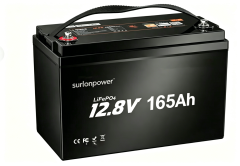
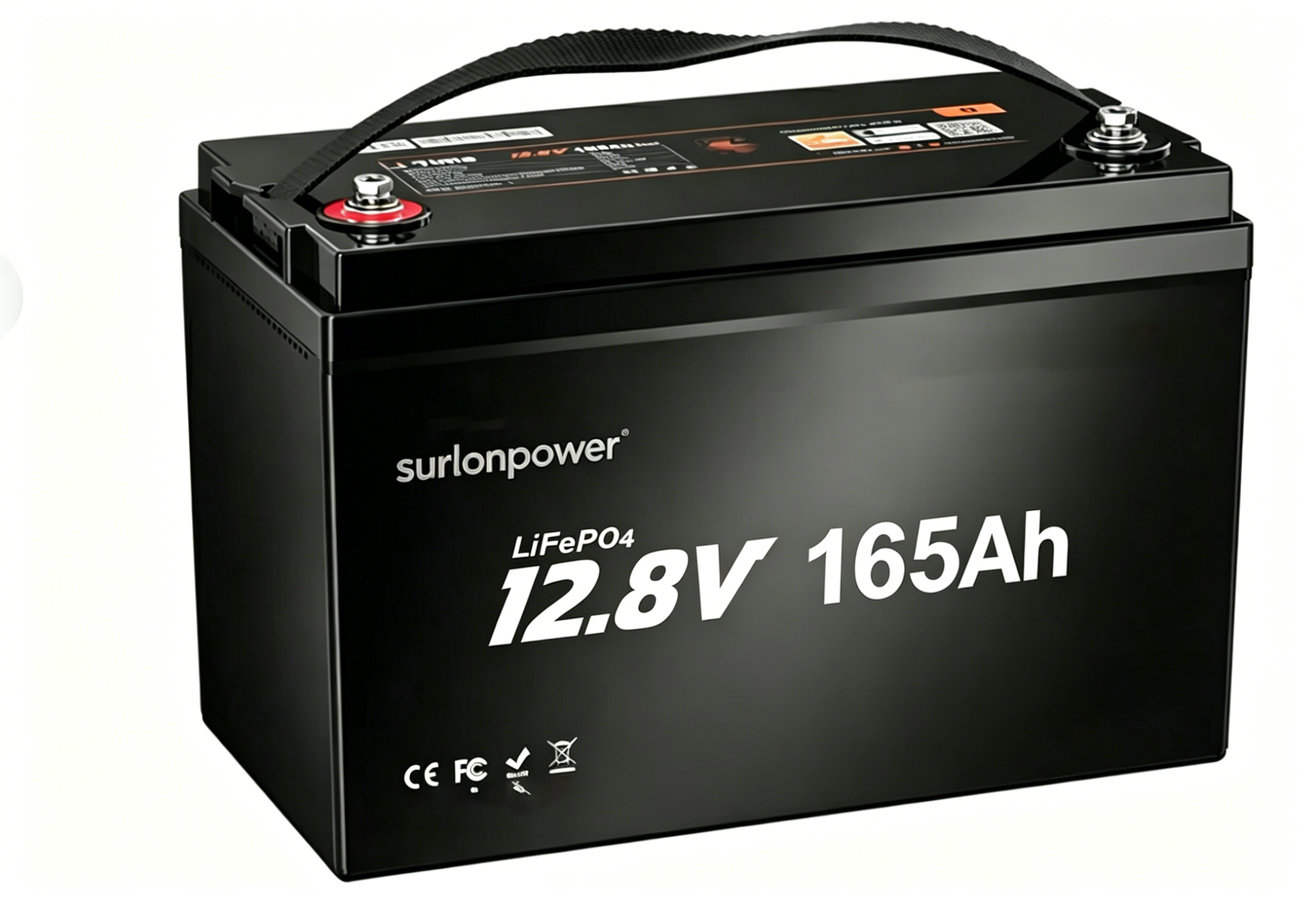
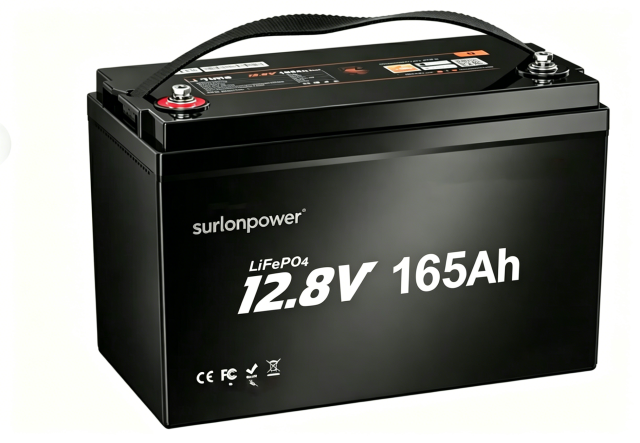
The 12.8V 165Ah LiFePO4 pack is built in a sealed ABS case, with M8 terminals and a footprint that suits equipment originally built around a 12V lead-acid block. It is a deep-cycle pack, made to be discharged and recharged shift after shift rather than to crank an engine.
It replaces compatible 12V lead-acid, SLA and deep-cycle batteries, keeping the 12V nominal class and the terminal format the machine already expects. Behind the case sit lithium iron phosphate cells managed by an integrated battery management system, so the pack protects itself instead of depending on an operator noticing a problem.
Typical buyers are equipment manufacturers fitting a 12V power block into a new or updated machine, solar and off-grid installers building 12V storage, marine and RV fitters replacing house batteries, telecom and security integrators, and golf-cart or utility-vehicle operators who combine several blocks into a higher-voltage bank.
In daily use the pack is charged from a LiFePO4-compatible charger and discharged into whatever the equipment asks for — lights, pumps, inverters, controllers or traction motors — until the management system reaches its cut-off. Nothing in that routine calls for a maintenance visit.
The model reference is GLFB6; quote it when you ask for the current specification sheet, drawings or spares.
What changes when the lead-acid block comes out
Lead-acid blocks carry a low purchase price and a high cost of ownership. Much of the advertised capacity is only reachable on a slow laboratory discharge, and as the block ages the voltage sags earlier in the shift, so equipment cuts out while there is still charge left inside.
Choosing this 12.8V lead acid replacement battery changes that behaviour. Lithium iron phosphate holds a flat voltage curve across most of the discharge, so the machine sees a steady supply until the management system stops it, and more of the stored energy actually reaches the load.
The efficiency figures point the same way: charge efficiency of 100% at 0.3C and discharge efficiency of 96–99% mean very little of the energy you pay for is lost as heat. On a short recharge window between shifts, that is the difference between a pack that keeps up and one that only just does.
The cycle rating is quoted at 100% depth of discharge, so a daily deep cycle sits inside the pack's design envelope rather than at its edge — usually the point at which a replacement programme pays for itself well before a second set of lead-acid blocks would have been due.
Weight and space move in the same direction. The pack is light enough for one technician to lift into the tray, and because there is no watering access to preserve, the space around it is easier to lay out.
What decides whether a swap goes smoothly is rarely the battery itself. It is the charger's profile, the machine's low-voltage cut-off and the way several blocks are wired into a bank — three points worth settling before the pack goes in.
| Model | GLFB6 |
|---|---|
| Battery chemistry | LiFePO4 (LFP) |
| Nominal voltage | 12.8V |
| Nominal capacity | 165Ah |
| Stored energy | 2112Wh |
| Cycle life | >2,000 cycles @ 0.2C, 100% DOD |
| Internal resistance (AC) | ≤40mΩ |
| Charge / discharge efficiency | 100% at 0.3C / 96–99% at 0.3C |
| Charge voltage | 14.4 ± 0.2V |
| Charge current | 33A (0.2C) recommended; 165A maximum, to be verified against the BMS and cell specification |
| Discharge current | 150A continuous; 200A maximum pulse; 10V cut-off |
| Charge temperature | 0°C to 45°C (32°F to 113°F) |
| Discharge / storage temperature | −20 °C to 60 °C (−4°F to 140°F) / 0 °C to 40 °C (32°F to 104°F) |
| Dimensions, weight and case | 330 × 172 × 215 mm ±2; 14.58 kg; ABS case |
| Terminals, ingress protection and indicator | M8 terminals; IP65; optional LED state-of-charge indicator |
Start from watt-hours, not from the label
The 12.8V 165Ah LiFePO4 battery stores 2,112Wh, and that is the number to divide by your own average draw. A steady 100W load runs for roughly 21 hours, 250W for about eight, 500W for about four and 1,000W for about two. Use the average consumption of the equipment rather than its nameplate rating, because a motor, pump or inverter almost never pulls its peak figure for the whole shift.
Then subtract what the system consumes
Discharge efficiency is 96–99% at 0.3C, so a small share of the stored energy leaves as heat. An inverter on the AC side usually takes another 10%, and lighting, controllers and standby electronics draw a little continuously. Plan from the corrected figure, not the round one.
Respect the current ceiling first
Current can cap the load before energy does. 150A continuous at 12.8V is about 1.9 kW, and the 200A pulse adds around 2.5 kW of short-term headroom for a motor start or a compressor surge. Equipment that expects more than 1.9 kW for minutes at a time needs a different configuration, not a larger fuse; the management system will disconnect the pack rather than let it overheat.
Series raises voltage, parallel raises amp-hours
Three blocks in series make a 38.4V 165Ah string and 6,336Wh, the shape a 36V-class golf cart or utility vehicle needs; four blocks make 51.2V and 8,448Wh for a 48V-class machine. Three blocks in parallel instead give 12.8V 495Ah and the same 6,336Wh. Either way, keep cable lengths matched and join blocks at a similar state of charge.
Temperature and service life both trim the total
The pack discharges down to −20 °C but must not be charged below 0 °C, and a cold pack gives up its stored energy sooner. The cycle rating of more than 2,000 cycles is quoted at 100% depth of discharge, so running the pack hard every day is within its design envelope but leaves less room for error than a gentler duty.
Leave headroom, then confirm on a sample
Plan on roughly 70–80% of your calculated figure as usable energy per shift, so a surge, a cold morning or a deeper-than-usual discharge does not strand the machine. Send us the load profile, duty cycle and recharge window and we will check the runtime expectation against the pack before you commit to a fleet order.
Technical questions reach the people who build the packs. Our engineering group in Shenzhen reviews your device's voltage window, load profile, enclosure space and charger before proposing a configuration; our sample group then builds units so you can validate fit and runtime before production. Cell selection, BMS design and pack assembly stay in-house, with quality checks in process and at final inspection, and a documentation team handling certificates, test reports and shipping papers. When a unit behaves unexpectedly in the field, our engineers help trace the fault and advise on installation and commissioning.
Yes, where the equipment is compatible. This 12.8V lead acid replacement battery keeps the 12V nominal class and the M8 terminal format, so the electrical side of the swap is straightforward. Check three things before you buy: the space in the tray, whether the charger can follow a lithium profile, and the machine's low-voltage cut-off. A charger built only for flooded or AGM packs needs replacing or reprogramming rather than adapting.
Yes, as one block in a series bank. A 36V-class cart is normally built from three 12.8V blocks and a 48V-class cart from four, and the finished string voltage has to sit inside the controller's operating window. The cart's charger must be set for lithium, and the compartment has to take the number of blocks you plan to fit, so confirm the layout before ordering.
33A, the 0.2C rate for a 165Ah pack, is the figure to design the charger around. The 165A maximum in the specification is a ceiling rather than a working setting and has to be verified against the final BMS and cell build. A smaller charger is fine when the recharge window is long enough; a larger one shortens turnaround but still has to respect the pack's limits.
There is no water to refill, no acid to clean off and no equalising charge to run. What it does need is a correctly set charger, clean and properly torqued terminals, an occasional look at the cables, and a location that stays inside the temperature ranges in the specification.
The case is IP65 rated, so dust cannot enter and water jets from any direction will not harm the cells. It is not designed to be submerged, so avoid a location where water pools around the base or where the terminal area stays wet for long periods.
Work it out from your average draw: a 500W load runs for roughly four hours and a 1,000W load roughly two before losses. Real runtime is shorter once inverter losses, temperature and the depth of discharge you allow are counted, and with motor loads the start-up surge matters as much as the running figure.
150A continuous is what the pack supplies for a sustained period. 200A is a short pulse for motor starts and similar surges. Size cables, fuses and the machine's expectations on the continuous figure and treat the pulse as headroom rather than a working current.
Yes. Parallel blocks add capacity and share the load, provided the cables are the same gauge and length, the blocks are at a similar state of charge when they are joined, and the charger can supply the combined current. Charge and discharge the bank as one unit instead of topping up individual blocks.