


The FB08 is a 36V 72Ah LiFePO4 floor scrubber battery: a 36V-class pack with 38.4V nominal voltage, 72Ah of capacity and 2.765kWh of stored energy, housed in a steel case. It is built to take the place of a 36V lead-acid bank in walk-behind and ride-on scrubbers, sweepers and industrial floor cleaners, keeping the tray layout and the between-shift charging rhythm familiar while removing the water, acid and terminal work that comes with flooded batteries.
Built as a 36V battery for commercial cleaning equipment, it suits contract cleaning companies running several machines, facility teams keeping a warehouse or a hospital floor to schedule, and equipment builders who want a custom floor scrubber battery in place of the lead-acid bank a machine was originally designed around. One pack sits where four or six blocks used to, which simplifies spares, charging points and operator training.
Inside the case are LiFePO4 cells, an integrated battery management system, and the terminals and connector arrangement agreed for the order. Pack weight is customized, so the unit can be brought close to the handling weight of the bank it replaces and to the machine's hold-down arrangement. Rated IP65, it is a pack that can go through purchasing approval as readily as it can go onto the workshop floor.
What decides whether it fits your machine is specific: the compartment envelope, the hold-down points, the connector and terminal layout, the charger profile and the current the scrubber draws. Send those details with the machine model and the answer stops being general. It is aimed at buyers and OEM buyers who want an alternative power source that lowers maintenance demands, and it suits ride-on and walk-behind scrubbers as well as other floor machine applications.
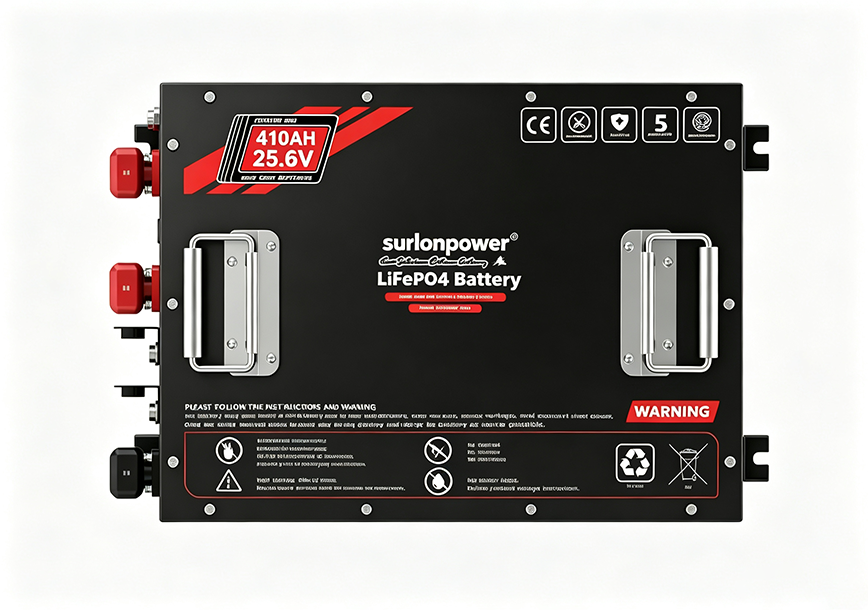
| Item | Specification |
|---|---|
| Battery chemistry | LiFePO4 |
| Nominal voltage | 36V (38.4V) |
| Nominal capacity | 72Ah |
| Stored energy | 2.765kWh |
| Dimensions (L × W × H) | 370 × 384 × 245 mm / 14.57 × 15.12 × 9.65 in |
| Weight | Customized |
| Continuous charge / discharge | 0.5C |
| Peak discharge | 2C |
| Charging temperature | 0°C ~ 55°C |
| Discharging temperature | -20°C ~ 60°C |
| Storage temperature | -20°C ~ 60°C (3 Months)0°C ~ 35°C (1 Year) |
| IP rating | IP65 |
| Housing | Steel |
Every pack carries an integrated battery management system sealed inside the case. It watches cell voltage, pack current and temperature, and it opens the circuit when any of them leaves the safe window: overcharge at the top of a charge, over-discharge when a machine is run flat, over-current when a brush stalls or a loaded ride-on machine climbs a ramp, short circuit, and over-temperature. Those are the events that quietly kill a lead-acid bank and then take a charger or a controller with them.
For a cleaning fleet, the practical effect is that abuse shows up as a trip rather than a repair bill. A pack that cuts out mid-shift is telling you something — a dragging brush, a tired charger, a machine left switched on overnight, a compartment with no airflow. Note the conditions and let us look at the case before the pack goes back into repeated service.
Current is where the specification earns its keep. The continuous and peak ratings in the table are the two numbers that matter: continuous is what a scrubber draws through a normal shift with brushes down and vacuum running, and peak covers starts, ramps and sudden loads. Tell us the inrush and stall current your machine can produce, and the duration and frequency it needs at that level, and we will confirm the configuration that suits it.
If your machine expects a communication handshake, an interlock or a specific signal from the battery, say so at the enquiry stage. What is supported on the data side is agreed per configuration rather than assumed from a voltage label.
The housing is steel rather than a moulded plastic shell. In a scrubber tray the pack is clamped down, the machine is steered hard and the compartment collects pads, squeegee bars and whatever else gets stored on top between shifts. Steel holds its shape under those hold-downs and keeps the cells mechanically protected in a way a thin plastic case does not.
IP65 is the rating that matters day to day. The first digit means dust-tight; the second means protection against water projected as a jet from any direction. For floor cleaning equipment that covers the realistic exposures — wet floors, water thrown up by the brushes, overspray from the squeegee and vacuum, and hosing the machine down at the end of a shift.
It is not a diving rating. Do not immerse the pack, do not direct a pressure washer at the case seams or the cable entry, and do not steam-clean it. If your wash-down routine is aggressive, tell us and we will say what the pack can take rather than leaving it to chance.
Chemical exposure is a separate question from water. If the site uses strong alkaline or solvent degreasers around the machine, mention it at the enquiry stage — attack on seals, labels and connectors is worth checking before the first order instead of after the first year. The case itself is closed in service; there are no user-serviceable parts inside, and a pack that has been opened is one we can no longer support. The steel enclosure resists dust and moisture and is built to hold up in the harsh conditions typical of commercial cleaning work.
A standard pack covers a lot of machines, but not all of them. Where the tray is a different shape, the connector is proprietary, or the machine needs a different capacity to reach its runtime target, we build to the machine. A custom floor scrubber battery from us can change capacity, voltage, case dimensions, terminal and connector arrangement, wiring, communication protocol, housing design, and the logo and labelling that goes on the case.
The process starts with what you already have: machine make and model, a drawing or photographs of the battery compartment, the connector pinout, the charger output and profile, the continuous and peak current the machine draws, and the runtime a shift has to deliver. If you are replacing an existing pack, the old part number and its label are useful too. Engineering turns that into a proposed configuration, we build a sample, and you validate it in the machine before production is discussed.
Most requests come from three places: a machine family where the standard envelope does not fit, a fleet that wants one pack type across mixed brands, and an OEM that wants its own branding on the case and label. Changes to the housing or the connector are a separately agreed configuration, so the drawing you approve is the drawing we build to.
| Document | What it covers |
| Pack datasheet | Electrical and mechanical specification of the configuration supplied |
| Dimensional drawing | Case envelope and mounting points, for checking the tray before ordering |
| UN38.3 summary | Transport test summary for shipping the pack as lithium batteries |
| UL1973 reference | Pack-level safety standard listed for this model |
| UL9540A reference | Thermal runaway test method referenced for this model |
| Charging guidance | Charger profile and temperature window for the pack |
| Label and marking detail | What appears on the case and label, confirmed for your market |
Orders are built to the configuration you approve, so the conversation starts with the machine rather than a part number. Send the machine make and model, the battery compartment drawing or photographs, connector and pinout details, the charger specification, the continuous and peak current the machine draws, and the runtime a shift has to cover. If you are converting a fleet, tell us how many machines are involved, which voltage classes they use, and whether the pack needs to be a custom floor scrubber battery built around an existing tray.
What comes back is a quotation for the agreed configuration, with the commercial terms that apply to it: price, order quantities, production lead time, packing and shipping arrangements. Those terms move with the configuration and the destination market, so they are confirmed in writing rather than read off a catalogue page. If you want to validate a unit in the machine first, ask your sales contact about sample availability and what a sample build involves.
The pack is offered with a five-year warranty; confirm the term that applies to your order and market in the quotation, together with the claim route if a unit ever gives trouble.
Shipping lithium batteries carries its own paperwork. UN38.3 test documentation and the transport documents for the consignment are prepared with the order, so tell us the destination country and the mode of transport early — whether the shipment is a single pack for a workshop or a 36V battery for commercial cleaning equipment going out to a fleet.
The pack is intended to supply reliable lithium power for commercial cleaning equipment across the working day.
As a direct replacement for lead-acid batteries in commercial and industrial floor scrubbers, it combines lithium iron phosphate cells with a battery management system to give higher energy efficiency, longer runtime and faster charging with maintenance-free operation, helping to reduce operating costs and equipment downtime.
Warehouses, shopping malls, hospitals and factories all ask the same thing of a scrubber battery: keep the machine running through a full shift without adding work. This battery is built for that routine. It reduces downtime and operational interruptions, and its maintenance-free design removes the job of refilling water and cleaning terminals. The result is consistent cleaning performance in demanding environments, with less labour tied up in battery care.
Technical questions reach the people who build the packs. Our engineering group in Shenzhen reviews your device's voltage window, load profile, enclosure space and charger before proposing a configuration; our sample group then builds units so you can validate fit and runtime before production. Cell selection, BMS design and pack assembly stay in-house, with quality checks in process and at final inspection, and a documentation team handling certificates, test reports and shipping papers. When a unit behaves unexpectedly in the field, our engineers help trace the fault and advise on installation and commissioning.
For many 36V lead-acid machines, yes — but compatibility is settled by four things, not by the voltage label: the battery compartment and hold-down, the connector and terminal layout, the charger profile, and the current your machine draws. Send the machine make and model, a photograph or drawing of the tray, the charger details and the old battery's label. With those we can confirm whether the 36V 72Ah LiFePO4 floor scrubber battery fits as it stands or needs a different configuration.
No, and it is worth being sceptical of any pack sold as a universal fit. Machines differ in low-voltage cut-off, charger behaviour, connector type and the space the tray actually gives. Some need a narrower case or a different terminal arrangement; a few expect a communication signal from the battery. We check the fit against your machine details before an order is built, and where the standard pack does not suit, we configure one that does.
The pack is rated for more than 4,000 charge and discharge cycles, with a design life of up to 10 years under the stated conditions. In service, life depends on how deeply the machine discharges it, the temperature at the charging point, and whether it is left flat for long periods. A scrubber worked to roughly half capacity each day and recharged between shifts will see considerably more cycles than one run to cut-off every day.
No watering, no acid handling and no equalisation charging. The routine is a visual check of terminals, cable and case, and a note of runtime if you track it. Do not open the case — there are no user-serviceable parts inside, and an opened pack cannot be supported.
It is certified to UN38.3, UL1973 and UL9540A. Ask for the documentation set for the configuration you are buying rather than a generic certificate pack: the paperwork that matters is the one naming the model and revision you receive, and it is prepared with the order.
In most machines it is a like-for-like change in the existing tray: isolate the machine, disconnect the old bank negative-first, lift the blocks out, check the compartment against the pack envelope, then set the new pack on the existing hold-downs and wire it with correct polarity. The step that catches people out is the charger — a lead-acid profile is not automatically right for LiFePO4, and the machine's low-voltage cut-off may need checking too. Have the charger reviewed before the first charge.
Yes. Capacity, voltage, case dimensions, terminal and connector layout, wiring, communication protocol, housing and labelling can all be set for a machine family. Send the compartment drawing, connector pinout, charger details and the runtime you need, and engineering will propose a configuration and build a sample for validation in the machine.
Yes. We build to your drawing and to your label, and we work with OEM engineering teams through the sample stage rather than handing over a catalogue part. The approved drawing and specification revision are what production is built against, and a change after approval is handled as a new configuration.
Three things work together: LiFePO4 cells that tolerate daily cycling, an integrated BMS that trips on overcharge, over-discharge, over-current, short circuit and over-temperature, and a sealed IP65 steel case that keeps water and dust away from the electronics. How the pack is charged matters as much — between shifts, inside the temperature window, and without long periods left flat.
Surlon Power manufactures it in its own plant in Guangdong, China, with cell selection, BMS design and pack assembly in-house. Packs are checked through assembly and again at final inspection, and the test documentation for your build is available on request.


