



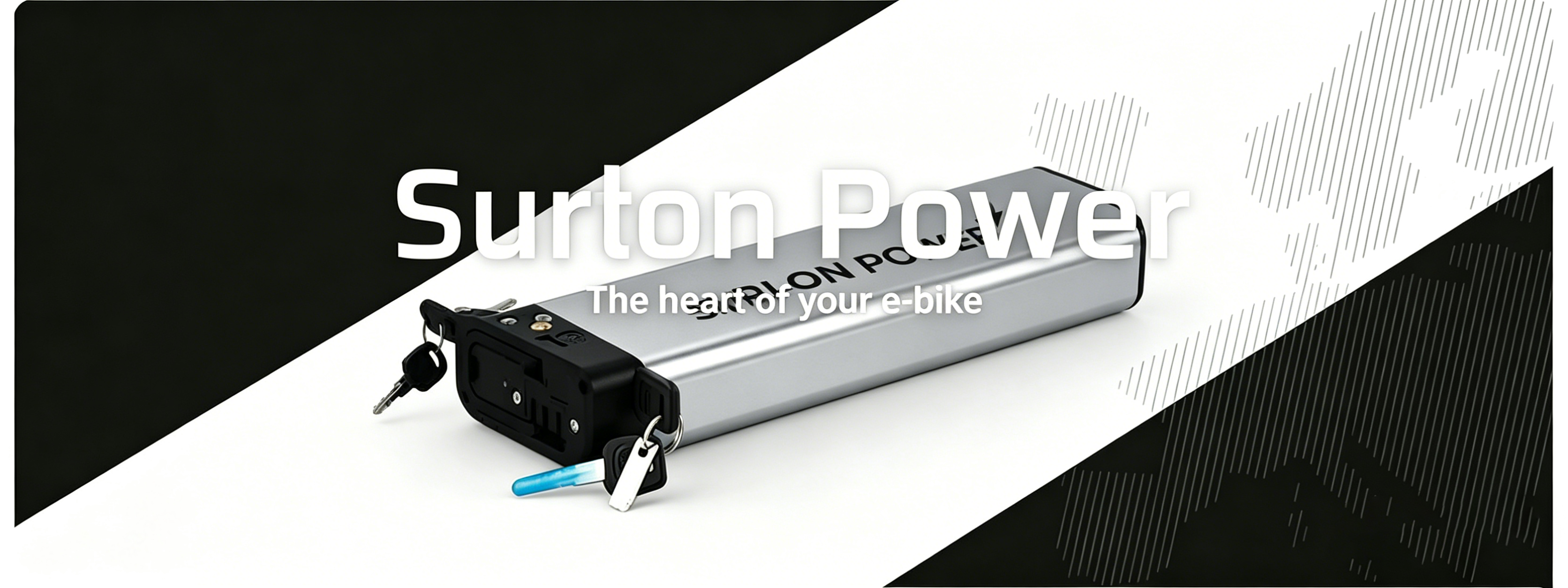
A frame-mounted lithium pack for e-bikes that need a light battery and a full day of assist.
Model EB01 is a 36V 10.5Ah NCM battery: a lithium nickel cobalt manganese pack in a slim rectangular case built to sit inside the frame of a city, trekking or hybrid e-bike. It is a 36V frame battery pack for electric bikes, sized to carry the weight low and central rather than on a rear rack, and light enough for riders who lift the bike into a hallway, a stairwell or a train.
Three kinds of buyer get the most from it. E-bike brands use it as the standard module on a commuter or light-trekking model, where a predictable pack matters more than a headline capacity. Workshops and retrofit shops fit it to older bikes whose original battery has reached the end of its life. Rental and delivery fleets keep a few on the shelf and swap them between bikes instead of waiting for a failure to take a machine out of service.
Day to day the pack behaves like part of the bike. It locks into its bracket, charges from the bike's charging point and feeds the motor through the discharge interface. There is no water to top up, no terminal corrosion to clean and no acid smell in the workshop; the routine is charging, an occasional check of the mounting screws and keeping the contacts dry.
What separates it from a generic battery block is the balance between weight and usable energy. The pack is light enough to lift off and carry indoors to charge, and steady enough in output that assist feels the same on the last kilometre as on the first. For a builder, that is what keeps an e-bike feeling like a bicycle rather than a small motorcycle.

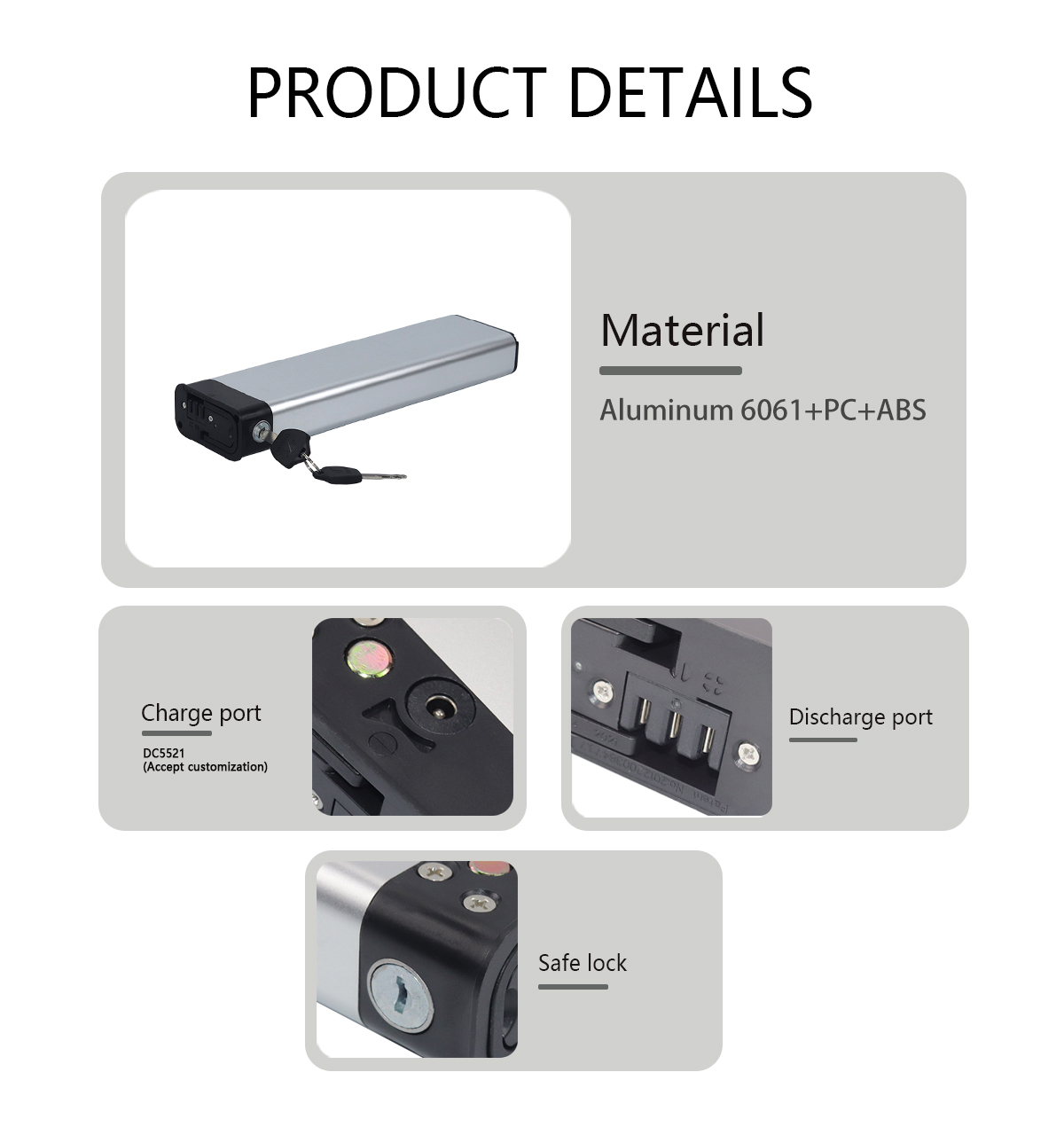
The pack is sealed, so the battery management system is the only thing standing between the cells and a bad day, and it works continuously rather than only when something goes wrong.
Inside the case it reads the voltage of each series group, the current flowing in and out, and the temperature around the cells. When any of those leaves the safe window, it acts: it stops charging on over-voltage, cuts discharge before the pack is drained too deep, opens the circuit on a short and shuts the pack down if temperature climbs. Each response protects the cells from the kind of stress that shortens life quietly rather than dramatically.
The second job is balancing. Series groups drift apart over hundreds of cycles, and the system bleeds the higher groups down so the pack keeps working with its full capacity instead of being limited by its weakest group. On a bike that shows up as assist that stays consistent as the pack ages, and as a pack that holds its range for more seasons.
There is a limit to what protection can do. It guards the cells against electrical and thermal abuse; it cannot make a mismatched charger safe, and it will not correct damaged wiring or a controller that asks for more than the pack is rated to give. If a pack shuts down repeatedly on the same bike, stop resetting it and tell us the pattern — how often, at which assist level, at what point in the ride — before the next charge.


Long routes are less about a headline figure than about how this 36V frame battery pack for electric bikes behaves in the last third of the ride.
NCM chemistry is chosen where energy per kilogram matters more than the long-cycle economics of lithium iron phosphate, which is why this 36V 10.5Ah NCM battery can carry a full day of assist without turning the bike into something you dread carrying upstairs. The weight sits low and central in the frame, so the bike still steers and handles the way its designer intended.
Output stays steady as the pack drains. A pack that sags under load makes the motor feel weaker as the ride goes on; this one holds its voltage band, so the assist level set at the start is roughly the assist you get at the end. For a fleet that consistency matters more than a peak figure, because riders stop reporting that the pack is fading three hours into a shift.
Charging fits real schedules: a standard charger overnight, or a top-up over lunch for a double shift. If your day regularly runs beyond the higher of the two range figures, keep a second pack charged and swap it, which takes seconds with the key.
Where this pack is not the answer: sustained steep climbs with heavy cargo, or routes that need two full working days per charge. The same housing is built in larger capacities for those duties, and it is worth comparing before a fleet standardises on one size.


| Product code | 36V10.5Ah |
| Voltage | 36V |
| Stored energy | 378Wh |
| Combination method | 10S3P |
| Internal resistance | ≦180mΩ |
| Weight | 4.2Kg |
| Dimensions (L × W × H) | 405 × 43 × 100 mm (15.94 × 1.69 × 3.94 in) |
| Charging limit voltage | 42V |
| Standard charging current | 2A |
| Maximum charging current | 5A |
| Discharge cut-off voltage | 27V |
| Standard discharge current | 3A |
| Maximum discharge current | 40A |
| Working temperature | charging:0~50℃discharging:-30~60℃ |
| Storage temperature | 1 years:-20~25℃3 months:-40~45℃1 month:-40~60℃ |
| Low-voltage switch | yes |
| Charging port wiring | DC2.1 |
| Discharging port wiring | 3pin |


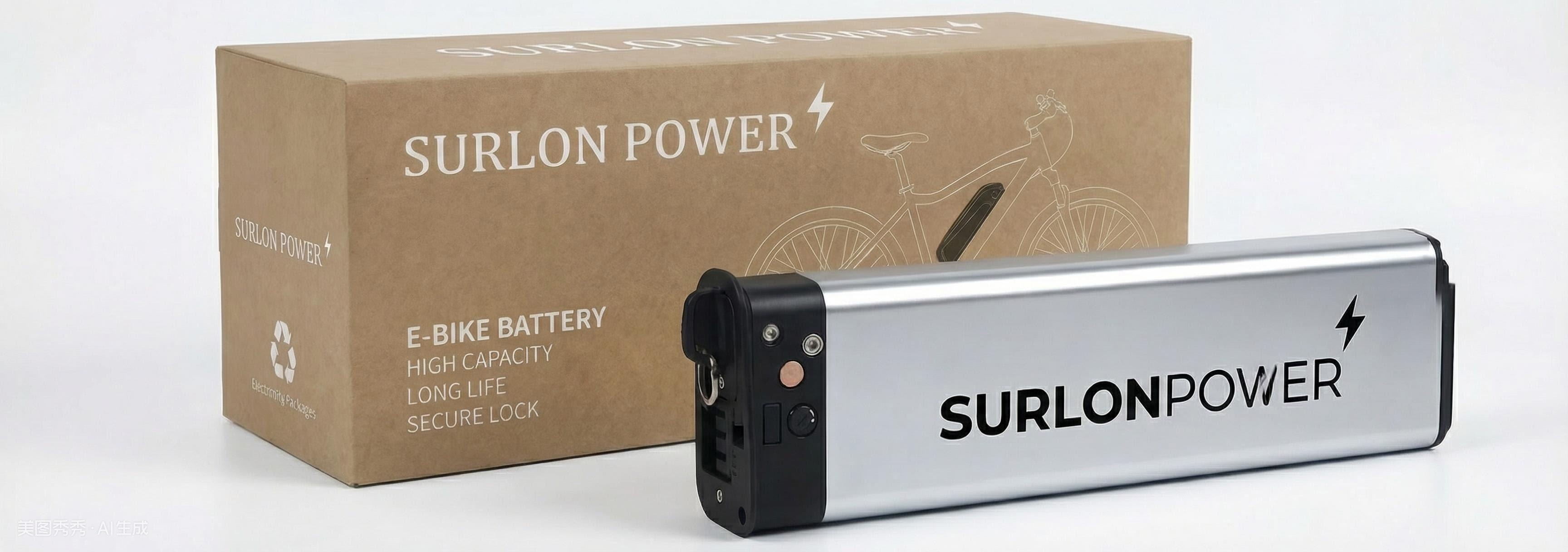
Charging is the part of ownership that most affects how long the pack lasts. Plug in with a charger matched to the pack's charge limits, at a temperature between 0℃ and 50℃, and unplug once the charge is complete rather than leaving it connected for days. A pack that comes in cold from a winter ride should be allowed to reach room temperature before charging, and the same applies after the bike has stood in direct summer sun.
Storing between seasons. For a winter lay-up, run the pack down to roughly half charge rather than full or empty, switch it off at the low-voltage switch, and take it off the bike. Keep it indoors, dry, and away from freezing sheds and hot vehicles. The storage window depends on how long it will sit: up to one month is rated for -40~60℃, up to three months for -40~45℃, and a full year for -20~25℃, so a cool cupboard suits it better than a garage that swings between frost and heat. Top the pack up every few months so it never sits deeply discharged, then charge it to full at room temperature before the first ride of the season.
Cleaning and contacts. Wipe the case with a dry or lightly damp cloth. Do not pressure-wash the pack, soak it, or leave the discharge port open to rain. Keep the port cover closed and the contacts dry, and check the mounting screws and bracket for looseness once a season.
Misuse that shortens life. The usual culprits are an old lead-acid charger left in service, charging a frozen pack, storing it flat for months, and leaving a full pack in a hot car or glasshouse over summer. None of these fail immediately; they surface a year later as reduced range, and they are the reason the storage and charging routine is worth keeping simple and consistent.

The battery sits in a durable, sealed housing that shields it from weather and everyday knocks. Inside are high-quality cells chosen for their long lifespan, working alongside a microprocessor-controlled battery management system that constantly monitors the pack's operating parameters. That system provides the protections that keep use safe, including protection against deep discharge, overcharging and overheating, and it balances voltage between cells to extend battery life. The built-in 30A BMS feeds a strong, steady supply to your bike's motor, so you get maximum performance even on the steepest climbs. Use 100% of your E-Bike potential.

Technical questions reach the people who build the packs. Our engineering group in Shenzhen reviews your device's voltage window, load profile, enclosure space and charger before proposing a configuration; our sample group then builds units so you can validate fit and runtime before production. Cell selection, BMS design and pack assembly stay in-house, with quality checks in process and at final inspection, and a documentation team handling certificates, test reports and shipping papers. When a unit behaves unexpectedly in the field, our engineers help trace the fault and advise on installation and commissioning.

Beyond the standard 36V 10.5Ah NCM battery we can adapt voltage, capacity and cell configuration to a project, and change connector type, housing detail and labels. Send your equipment requirements — available space, load profile, charger and target runtime — and our engineers propose a configuration for review. Anything that departs from the standard build goes through a specification review first, because a change to the protection board or the housing can affect fit, validation and tooling.
It carries 30 A continuously, which gives a mid-drive or hub motor the headroom it needs on a climb without the pack browning out. It also keeps the pack inside a safe window: charging is cut at the top, discharge stops before the cells are over-drained, and the circuit opens if temperature or current leaves the permitted range. Because it balances the series groups as the pack cycles, capacity does not drift downward early in life. The thresholds are set at build and are not user-adjustable, so protection matches the cells actually inside the case rather than a generic default.
Yes. Long-distance riding is what this pack is sized for: enough energy for a full commuting day, a shape that lets a spare travel on a rack, and output that stays steady as the pack drains, so assist does not fade in the last hour. What it cannot do is beat physics — a heavy rider, a loaded trailer or a day of steep climbs shortens any pack's range. Send the route profile, the rider weight and the cargo you carry; as an e-bike battery supplier we would rather point you to the right size, this pack or a larger one in the same family, than sell you one that runs out halfway.
It fits frames built around this rectangular format, and four things decide it: the bracket pattern, the space in the frame channel, clearance for the key and the cable bend, and the connector on your bike's wiring. Send a photo of the empty compartment with a tape measure across it plus a photo of the old pack's connector, and we will confirm before you order. It is intended for frame mounting, not for rear-rack or seat-post brackets.
Mechanically it may fit, but the electrical side has to be checked. A lead-acid charger uses a different charging profile and will not treat a lithium pack correctly, so plan on a charger matched to the pack's charge limits. Check the controller's voltage window and cut-off, confirm the connector and polarity, and have the combination reviewed before the first ride. Converted bikes work well when charger and controller are matched to the pack, and poorly when compatibility is assumed.
Store it part-charged rather than full or flat, in a dry place with a stable temperature, and top it up every few months so it does not sit deeply discharged through the winter. Take it off the bike if the bike is kept outdoors or somewhere damp, keep the contacts clean and dry, and charge it at room temperature before the first ride of the season.


