


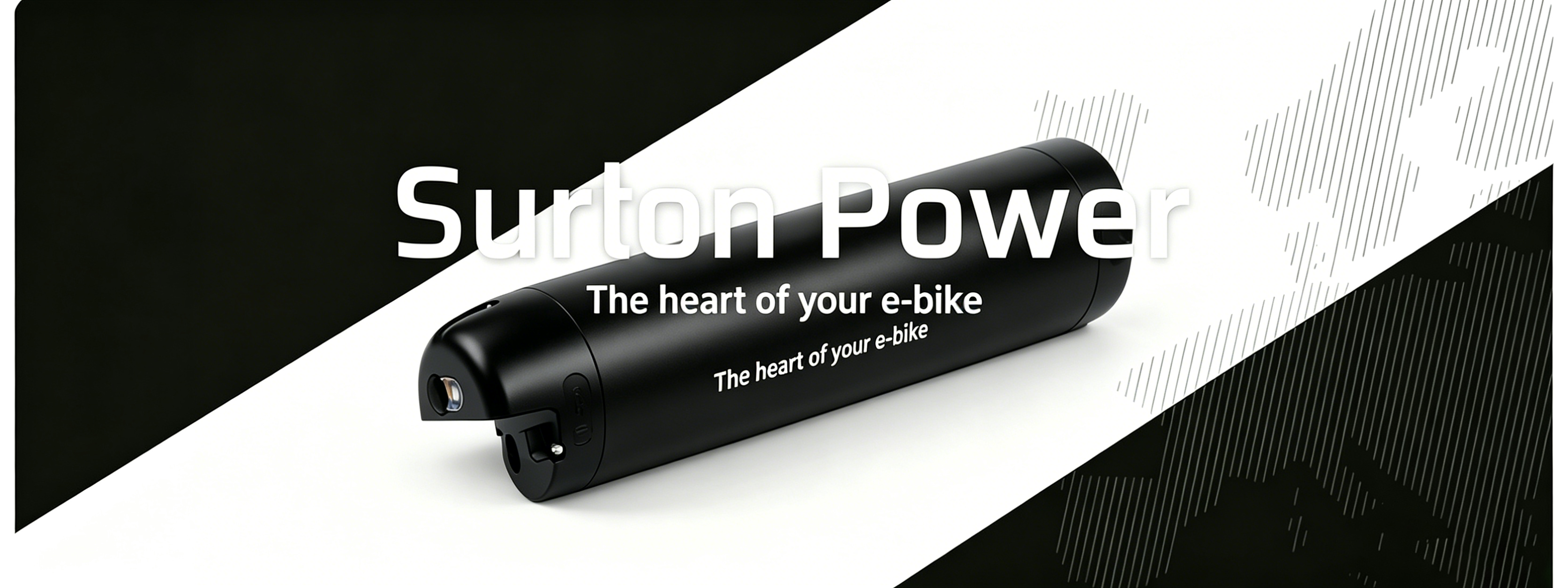
The Surlon Power EB05 is a 36V 14Ah NCM battery pack built for e-bikes that need dependable, frame-mounted energy without excess bulk. Its cells are arranged 10S4P and store 504Wh — a reserve that covers a daily commute, a weekend endurance ride or a full shift on a rental bike without the rider watching the gauge every few kilometres.
We supply this pack to three kinds of buyer. E-bike makers fit it to a new model that has settled on a 36V system. Workshops and retrofit shops use it to replace a tired pack on a bike already in service, in a Hailong-format housing designed to sit in the matching frame cradle. Rental and share operators standardise on one format so packs can move between bikes without retraining staff. In each case the pack slides into its cradle and locks, which keeps installation familiar for the people who build or service the bike.
NCM chemistry is why the pack stays light for what it stores. Nickel-cobalt-manganese cells hold more energy per kilogram than the LiFePO4 cells behind our floor scrubber, golf cart and SLA replacement ranges. On an e-bike that difference shows up in handling: weight carried high on the downtube changes how a machine steers, climbs and feels over rough ground.
This is one model in a wider e-bike and light-mobility line that also includes LiFePO4 packs and our own BMS boards, so a project that later moves to a different voltage or chemistry does not have to start over with a new supplier.
Start with the drawing, not the label. Compare the pack's length, height and width in the specification with a measured drawing of your compartment, and leave room for the cradle rails, the locking mechanism and the cable bend at the discharge end. A pack that fits the opening but pinches the cable will fail at the connector long before the cells wear out.
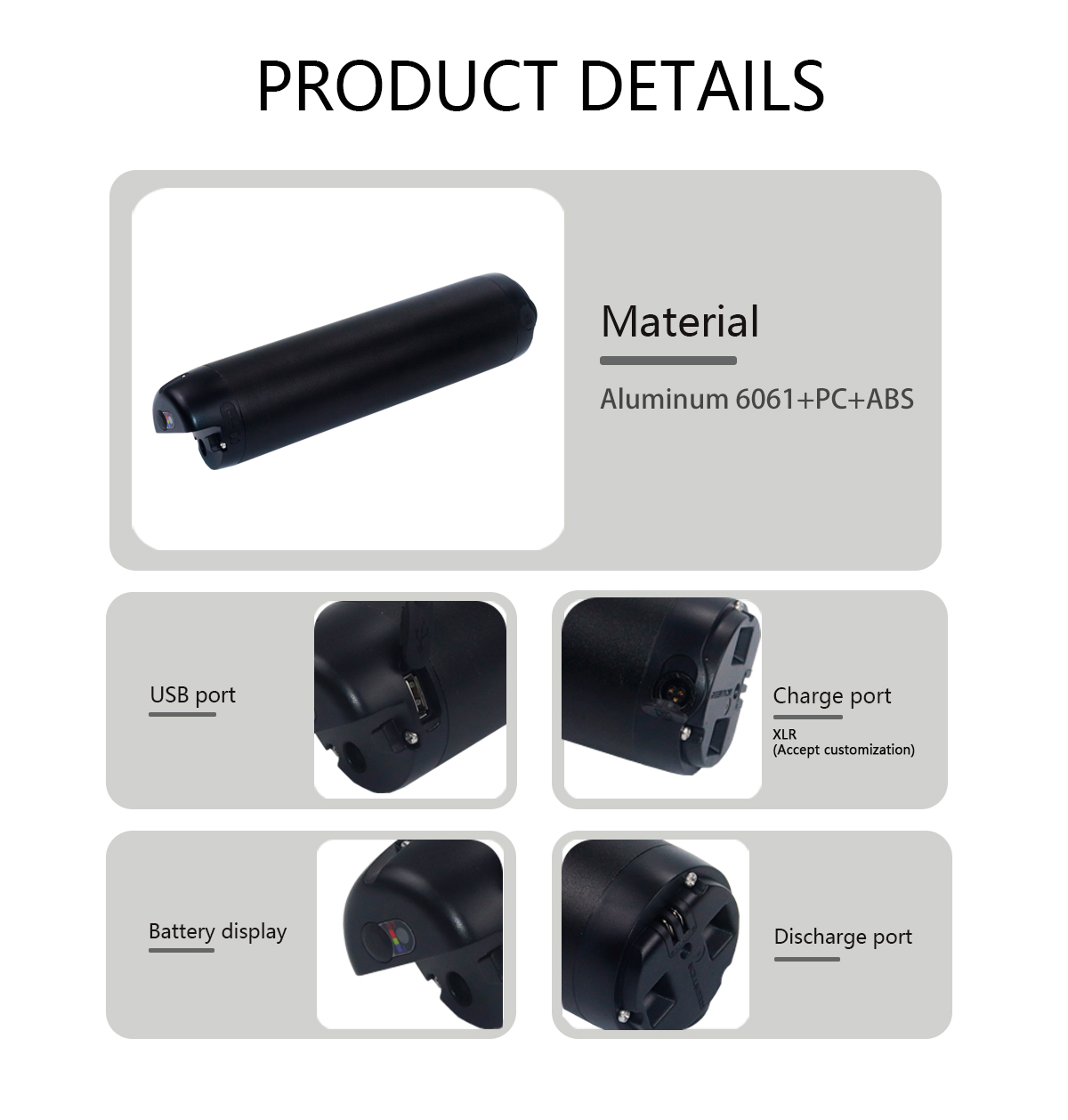
The two port definitions tell you what has to mate. Charging-port wiring is DC2.1 and discharging-port wiring is 3pin, so check the plug on your charger against the first and the plug on your controller cable against the second. Pinout and polarity matter as much as the shape: a 3pin connector wired in a different order is not the same connector. If your bike uses something else, tell us at the enquiry stage rather than adapting the wiring afterwards.
The controller has its own expectations. It must be a 36V nominal system, and its low-voltage cut-off should agree with the pack's discharge cut-off — if the controller keeps pulling after the pack has reached its limit, the bike will cut out under load and the cells will be worked harder than they should be. The charger has to respect the charging limit voltage as well, which is why we ask for the charger model before a sample is agreed.
As a 36V lithium battery for electric bikes, this pack has to match more than a voltage number. Send a photo of the compartment, the old pack's label, the controller plug and the charger label, and we will confirm whether the standard build fits or whether the housing, connector or wiring needs a variant.
The pack carries a built-in 30A battery management system, mounted inside the housing with the cells. It watches what the pack is doing while the bike is ridden and steps in before a fault becomes damage: over-voltage and overcharge on the way in, deep discharge on the way out, over-temperature when the motor works hard or the day is hot, and short circuit if a cable or connector fails.
Balancing is the quieter half of the job. The system keeps the series groups at the same voltage, so usable capacity is not lost because one group drifted away from the rest. That is the difference between a pack that still delivers close to its rated energy after a couple of seasons and one that sags early and gets blamed on the motor.
A low-voltage switch lets the output be isolated, which is useful when a pack is taken out of service, stored or moved between bikes. Riders should not have to think about any of this; the value is that the protection is already working when a controller asks for current on a climb.
One practical rule for workshops: if a pack has tripped protection, find the cause before resetting it. Repeated resets hide a wiring fault, a failing charger or a weak cell group, and the next trip may not be so forgiving.


The range figures for this pack are favourable-case numbers on a favourable route: up to 70 km on a charge when the bike is ridden gently in ECO, and up to 50 km when it is ridden hard in TURBO. The battery has not changed between those two numbers — what changes is how often and how hard the motor asks for current.
Read both as a comparison rather than a promise. Rider and luggage weight, hills, headwind, ambient temperature, tyre pressure and the number of stops all move the figure, and a cold morning takes a noticeable bite out of it. Stop-start city riding is harder on a pack than a steady towpath, and a loaded utility bike is harder again.
For planning, work from the lower number. A commuter who knows the round trip and the terrain can decide how much assist to spend each way; a fleet can set shift lengths around the TURBO case and treat the ECO figure as the generous end of the envelope. It is also worth telling riders which mode the figure refers to, because most range complaints come from a number quoted without its conditions.


| Product code | 36V14Ah |
| Nominal voltage | 36V |
| Stored energy | 504Wh |
| Combination method | 10S4P |
| Internal resistance | ≦150mΩ |
| Weight | 4Kg |
| Dimensions (L × W × H) | 326 × 63 × 86 mm |
| Charging limit voltage | 42V |
| Charging current (standard / maximum) | 2A / 5A |
| Discharge cut-off voltage | 27V |
| Discharge current (standard / maximum) | 3A / 40A |
| Working temperature | charging:0~50℃discharging:-30~60℃ |
| Storage temperature | 1 years:-20~25℃3 months:-40~45℃1 month:-40~60℃ |
| Low-voltage switch | yes |


The chemistry decision should follow the bike's duty, not the other way round. NCM is the reason this 36V 14Ah NCM battery pack stores 504Wh in a 4 kg housing: nickel-cobalt-manganese cells hold more energy per kilogram, so the pack stays light enough for a frame-mounted bike to steer and climb well. For a commuter, rental or retrofit bike where range and handling matter more than many seasons of cycling, that weight advantage is the practical reason to choose NCM.
LiFePO4 belongs in the conversation when cycle life and tolerance of deep, frequent discharge outweigh weight. Our LiFePO4 packs for floor scrubbers, golf carts and SLA replacement service are built around exactly that trade-off: heavier for the same capacity, but happier with daily hard use. An e-bike fleet that runs several shifts a day and can accept a larger, heavier pack may find the longer service interval worth it; a consumer-style bike with a fixed downtube cradle usually cannot.
Work through four questions before settling on a chemistry. What does the frame or cradle allow in length, width and height? How many charge cycles will the bike see in a year, and how deep will each discharge be? Will the pack live in a cold workshop or a hot van? And what charger and controller are already fixed in the design? A 36V nominal system can be built in either chemistry, but the voltage window, charging profile and BMS settings differ, so the pack has to be specified as a complete system rather than swapped by label.
The paperwork follows the same logic. NCM and LiFePO4 cells do not behave the same in a pack, so the BMS settings, charging limits and transport documentation are raised for the actual configuration you approve. If your project may later move to a longer-life chemistry, tell us at the sample stage: we build both chemistries in-house and can compare them against your frame, load profile and expected annual distance before you commit a production order.

Inside a durable, sealed housing we've enclosed more than just high-quality cells built for a long service life. A microprocessor-controlled battery management system constantly monitors the battery's operating parameters and provides all the protections that keep your rides safe, including protection against deep discharge, overcharging and overheating. It also balances the voltage between cells to extend battery life. The built-in 30A BMS is a high-output source of energy for your bike's motor, so you keep maximum performance even on the steepest climbs and use 100% of your e-bike's potential.

Technical questions reach the people who build the packs. Our engineering group in Shenzhen reviews your device's voltage window, load profile, enclosure space and charger before proposing a configuration; our sample group then builds units so you can validate fit and runtime before production. Cell selection, BMS design and pack assembly stay in-house, with quality checks in process and at final inspection, and a documentation team handling certificates, test reports and shipping papers. When a unit behaves unexpectedly in the field, our engineers help trace the fault and advise on installation and commissioning.

We build the 36V 14Ah NCM battery pack in variants around voltage, capacity and cell configuration, and we change the parts that decide whether it fits your bike: connector type and pinout, cable length, port arrangement, BMS settings and housing details. Our engineering team works from your frame drawing, controller and charger information rather than from the label alone, and the proposed configuration is agreed with you before a sample is built. If a different chemistry suits the project better, that is part of the same conversation.
The pack carries a built-in 30A battery management system inside the housing. It monitors cell voltage, current and temperature, and steps in on over-voltage, over-discharge, over-temperature and short circuit, so a rider never has to manage the pack manually. Balancing keeps the series groups at the same voltage, which protects usable capacity over hundreds of cycles and keeps output steady on long climbs where the motor draws hard. If a pack has tripped, find out why before resetting it — repeated resets hide a real fault.
Yes. Capacity here is sized for commuting and endurance riding rather than short hops, and the assist level changes how far a charge goes: a rider who stays in ECO covers substantially more ground than one who leaves the bike in TURBO. Weight, terrain, wind, temperature and stop-start traffic all move the figure, so plan the longest days around the harder riding case rather than the most favorable one.
Every custom e-bike battery pack is checked through the same six-step electrical and mechanical routine before it is packed, and units are released against the revision you approved. For international shipments we prepare the transport documentation lithium batteries need for the mode you choose, and confirm what your destination market requires. Tell us the country and the shipping method at the quotation stage so the paperwork matches the route rather than being sorted out at the port.
Yes. The housing has an integrated USB port for topping up a phone, a bike computer or a small light on the move. It draws from the same pack that drives the motor, so heavy accessory use shortens the distance you get from a charge, but a single phone charge is a small fraction of what the pack holds. Keep the port closed when the bike is parked in rain or dust.
Only if its output matches. The charger must respect this pack's charging limit voltage and stay within the charging current the pack accepts, and the plug has to suit the charging inlet. Send us a photo of the charger label and we will tell you whether it is suitable. A charger intended for a different pack can trip protection, shorten cell life or damage the pack outright.
Choose on the job the pack has to do. NCM cells store more energy per kilogram, which is why they suit e-bikes, where weight on the frame changes handling and range. LiFePO4 cells are heavier for the same capacity but take many more cycles, which is why our floor scrubber, golf cart and SLA replacement packs use them. If your e-bike programme is high-mileage fleet work and weight is not critical, compare both before you settle.


