Facebook
  • Surlon Power NCM |  36V17.5Ah E-bike battery
  • Surlon Power NCM |  36V17.5Ah E-bike battery

Surlon Power NCM | 36V17.5Ah E-bike battery

No.EB04
36V 17.5Ah NCM lithium battery with 630Wh, 10S5P layout, 30A BMS and 3.6 kg case. Custom e-bike battery packs built to your frame and controller.
  • Surlon Power NCM |  36V17.5Ah E-bike battery

Description

Product Overview

Surlon Power builds this pack for e-bike makers, retrofit workshops and rental fleets that want a dependable 36-volt energy source without moving up to a heavier 48 V system. This 36V 17.5Ah NCM lithium battery stores 630 Wh in a 10S5P layout — ten cells in series, five in parallel — which holds voltage steady under load and spreads current across five cell groups instead of three. A 30 A battery management system sits inside the sealed case.

Before you commit, check the frame or rack space against the dimensions in the specifications. NCM chemistry is chosen for energy density: it puts more watt-hours into a given volume than LiFePO4 does, which is exactly what a bicycle frame rewards. The lock, charging inlet, discharge outlet and level display are already built into the housing, so the pack arrives as a finished unit rather than a kit of parts.
Surlon Power NCM | 36V17.5Ah E-bike battery

Housing, Ports & Controls

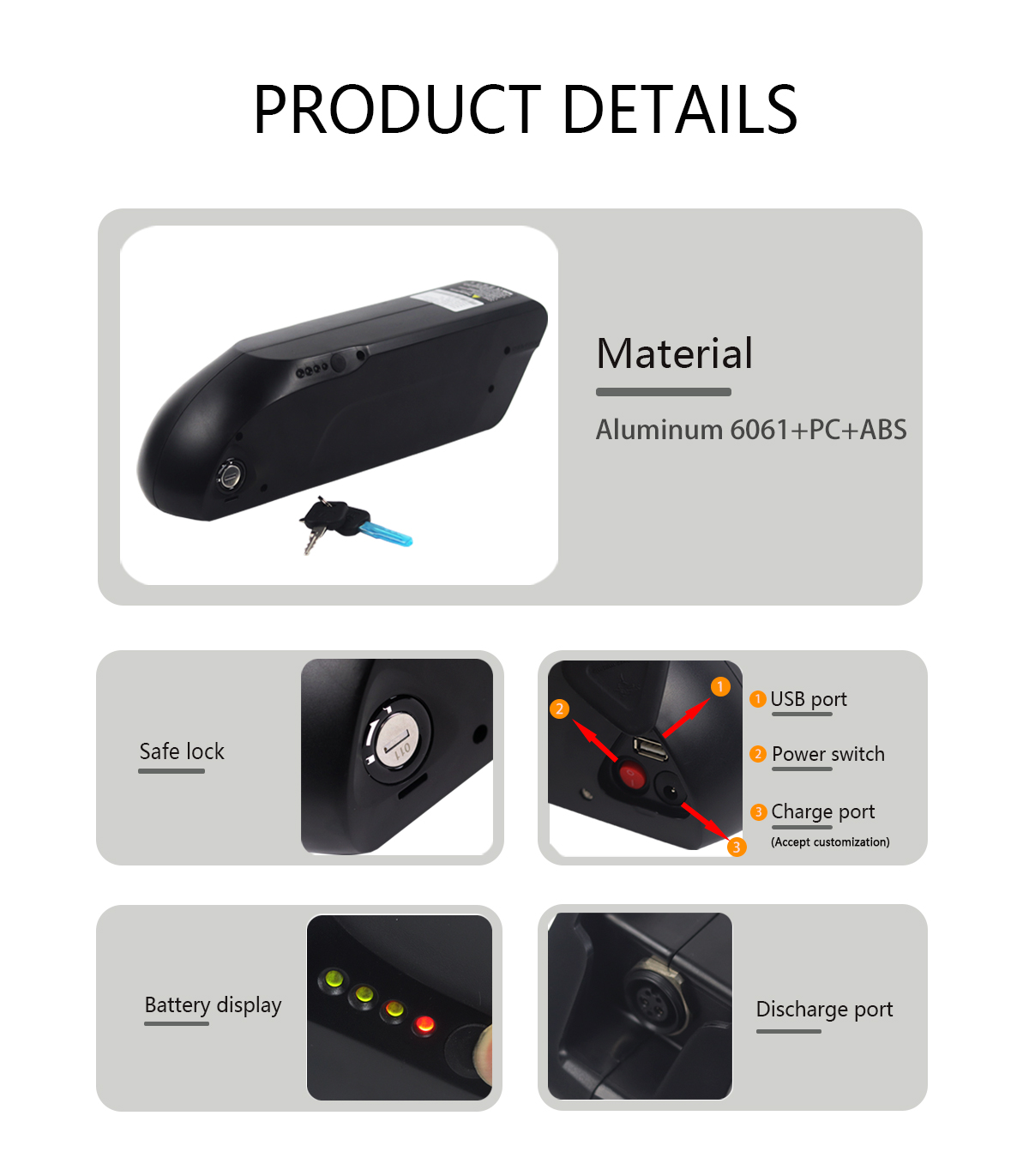
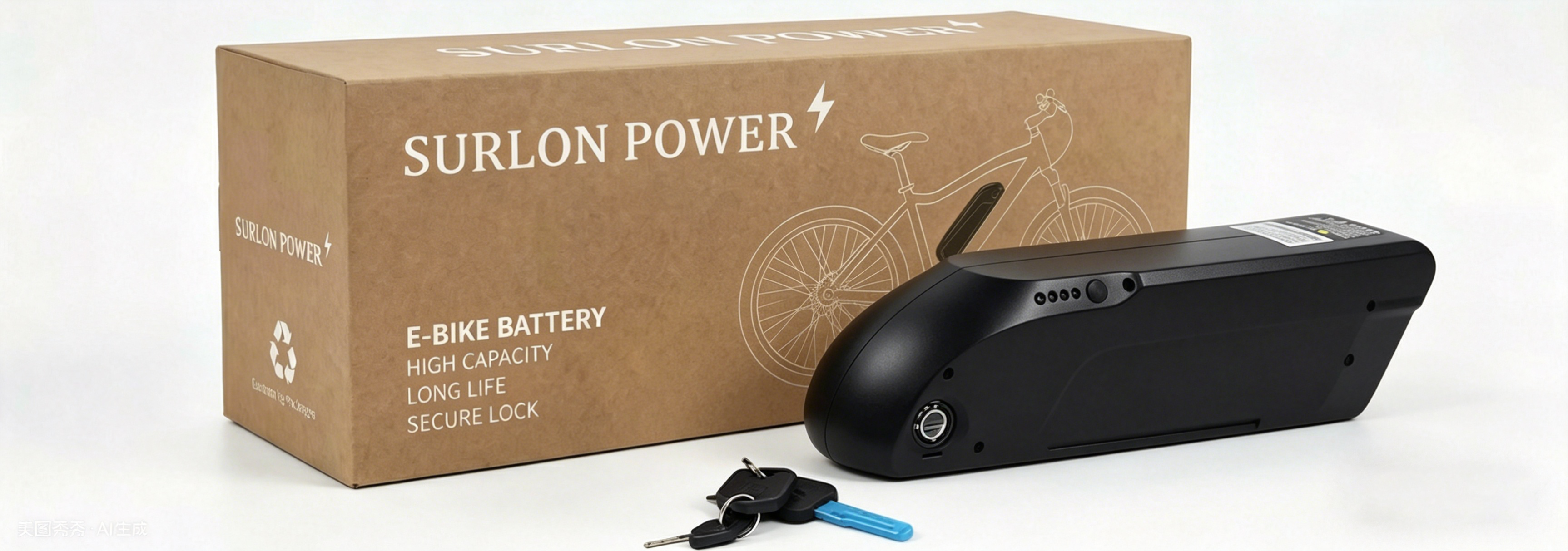
Black e-bike battery pack with lock, USB port, power switch, charge port
  • Keyed lock — The case latches and locks with a key, so the pack stays seated over rough ground and cannot simply be lifted off the bike at a rack.
  • USB port — A USB outlet on the housing charges a phone or a bike computer during the ride, drawn from the pack itself rather than a separate power bank.
  • Power switch — Isolates the output when the bike is parked or the pack goes into storage, so the BMS is not left slowly draining the cells.
  • Charge inlet (DC2.1) — The standard DC2.1 socket takes the charger directly, and it is the port to quote when you are matching an existing charger.
  • Discharge outlet (3-pin) — A three-pin output that mates with the bike wiring loom; check the plug on your own loom and the polarity against our drawing.
  • Battery level display — Press the switch and the indicator reads remaining charge in steps, which is useful on a rental handover when there is no app or dashboard.
  • Matte black casing — The housing is finished in matte black, a low-key colour that hides scuffs on a commuter or work bike.
  • Port arrangement on request — Charge port, discharge port and connector layout can be changed for a production run; tell us what the bike needs and we will confirm what is possible.
Surlon Power NCM | 36V17.5Ah E-bike battery

Battery Management & Motor Power

A sealed case only helps if what sits inside it can take punishment, so the pack pairs long-life cells with a 30 A battery management system that reads cell voltage, current and temperature continuously. It stops charging on over-voltage, cuts discharge before deep discharge can damage the cells, trips on short circuit and shuts down when temperature climbs. It also balances the ten cell groups against each other, which is what keeps a 10S5P pack delivering even power in its third year instead of sagging on the first long climb of the day.

The BMS is rated at 30 A continuous, and inside a bicycle that rating sets the working ceiling for the motor. The specification lists a 40 A maximum discharge current, which is a short-duration figure rather than a rating you can hold for a whole climb. If your controller pulls more than 30 A for long stretches, tell our engineers the controller model and the duty cycle and we will review the configuration with you before you order. A low-voltage switch lets you isolate the pack completely when the bike is parked for weeks.

Factory Build & Quality Control

  1. Components are chosen on test results. Cells and electronics come from suppliers we have benchmarked in our own lab, and incoming batches are re-checked rather than trusted on the previous delivery.
  2. Every cell is tested. Each cell is measured before it goes anywhere near a pack; anything outside specification is pulled out of the line.
  3. Cells are matched before assembly. Units are grouped by measured behaviour so the ten series groups in the finished pack age at a similar rate instead of one dragging the rest down.
  4. The pack is assembled in our own factory in China. From the first drawing to the finished unit the work stays in-house, which is how we keep the same build for a repeat order a year later.
  5. Six electrical and mechanical checks. Every finished battery goes through a six-step electrical and mechanical quality control before packing; units that fail are not shipped.
  6. Standards and paperwork travel with the pack. The build follows CE, UKCA, UN38.3 and IEC 62133-2:2017 requirements, and the matching documents are prepared for the shipment.
  7. When a project needs a custom e-bike battery pack rather than a catalogue unit, the same line builds it — same cells, same matching, same checks, with the voltage, capacity or connector arrangement adjusted to the bike.
Surlon Power NCM | 36V17.5Ah E-bike battery

Long-Route Energy

  • Daily commuting — A rider covering a serious distance each way on assist gets through a working week on a single charge in most cases, so the evening routine stays a plug-in, not a logistics exercise.
  • Rental and shared fleets — A 36V battery pack for electric bicycles in a rental pool is swapped between riders all day; with 630 Wh per pack a swap takes less time than a charge, and the depot can charge the depleted unit off the bike.
  • Last-mile and cargo duty — A laden bike pulls more current from every start. Five parallel cell groups share that demand, which keeps voltage from sagging when the bike is loaded and the route is stop-start.
  • Weekend touring — Riders planning long days can carry a second pack and swap at a lunch stop, which costs less than buying a bigger frame battery and keeps the bike's balance unchanged.
  • Product line gaps — For an OEM filling the space between a small commuter pack and a large touring pack, 630 Wh is the middle of the 36 V range and the easiest step up from a 10.5Ah build.
Surlon Power NCM | 36V17.5Ah E-bike battery

Eco and Turbo Range

Range figures are only useful when you know how they were produced. On a controlled test route, this 36V 17.5Ah NCM lithium battery returns up to 70 km when the motor is ridden softly in ECO mode, and up to 50 km when it is pushed hard in TURBO. The 20 km difference is the price of assist level, and it is the honest way to read the pair: the same pack, two very different riding styles.

Rider weight, payload, tyre pressure, hills, headwind and air temperature all move the number further, and a cold morning costs range before the pack has warmed into its working window. For a fleet, do not plan on the test figure. Run your own route with a rider of typical weight, log the distance in each assist mode, and use that as the planning number. Then decide whether one pack per bike is enough or whether the depot needs a spare per shift — that decision is worth far more than a brochure claim.

Surlon Power NCM | 36V17.5Ah E-bike battery

Specifications

Surlon Power NCM | 36V17.5Ah E-bike battery
Product code36V17.5Ah
Nominal voltage / capacity36 V / 17.5 Ah
Stored energy630 Wh
Cell configuration10S5P, NCM
Internal resistance≦200mΩ
Weight3.6Kg
Dimensions (L × W × H)378 × 78 × 114 mm (14.9 × 3.1 × 4.0 in)
Charging limit voltage42V
Standard / maximum charging current2 A / 5 A
Discharge cut-off voltage27V
Standard / maximum discharge current3 A / 40 A
Working temperaturecharging:0~50℃discharging:-30~60℃
Storage temperature1 years:-20~25℃3 months:-40~45℃1 month:-40~60℃
Low-voltage switchyes
Charging port / discharging portDC2.1 / 3-pin

Fitting & Charging

  1. Measure the space first. The case size in the specifications is the case alone — add clearance for the lock, the cable bend and the frame bracket before you order.
  2. Match the wiring. The discharge outlet is 3-pin and the charge inlet is DC2.1; check the plug on your bike's wiring loom and the polarity against our drawing rather than assuming they match.
  3. Confirm the controller window. This 36V battery pack for electric bicycles is built around a 42 V charge limit and a 27 V cut-off; if your controller expects a different window, talk to us before fitting anything.
  4. Charge inside the ratings. 2 A is the standard charging current and 5 A the maximum. Use a charger set to the 42 V limit, do not exceed 5 A, and keep charging between 0 °C and 50 °C.
  5. Power up and test. Switch on, read the level indicator, then ride a short loop through the assist levels to confirm the pack holds voltage under load before you hand the bike over.
  6. Store it properly. For a bike going into storage, isolate the output with the switch and keep the pack inside the storage bands printed in the specification above.
Surlon Power NCM | 36V17.5Ah E-bike battery

Ordering & Delivery

  • Send the application first. Bike model or frame drawing, controller voltage window, connector type, expected daily distance and the quantity you are planning is enough for us to confirm whether this pack fits, or whether a custom e-bike battery pack makes more sense for your build.
  • Samples and evaluation. Ask your sales contact about sample availability, the current lead time and what a sample evaluation covers for your market before you commit to a production run.
  • Transport documents. Lithium packs are regulated cargo, so freight is booked with a carrier that accepts batteries. The UN38.3 test summary and the shipping papers travel with the shipment — confirm the exact document set your destination country asks for before booking.
  • Packing. Packs are packed for pallet or parcel transport with the terminals protected; tell us if your warehouse needs a particular carton marking or pallet configuration.
  • Price, minimum quantity and lead time. These are quoted per configuration, quantity and destination. Confirm the current figures with your sales contact rather than planning on a number from an earlier conversation.
  • Warranty and after-sales. Warranty terms are set per order and market, so ask for them in writing with the quotation and keep that document as the reference for both sides.
  • Not the right platform? We also build LiFePO4 replacement packs, battery cells and BMS boards for other equipment — tell us what you are powering and we will point you to the closest option.
Surlon Power NCM | 36V17.5Ah E-bike battery

Reliability and Performance in Any Situation

A durable, sealed housing holds high-quality cells built for a long service life, together with a microprocessor-controlled battery management system that continuously monitors the battery's operating parameters. That system provides the protections needed for safe everyday use — against deep discharge, overcharging and overheating — and balances the voltage between cells to extend battery life. The built-in 30A BMS also feeds the motor with a strong, steady supply of energy, so you keep maximum performance even on the steepest climbs and can use the full potential of your e-bike.

Surlon Power NCM | 36V17.5Ah E-bike battery

Technical Support & Model Matching

Technical questions reach the people who build the packs. Our engineering group in Shenzhen reviews your device's voltage window, load profile, enclosure space and charger before proposing a configuration; our sample group then builds units so you can validate fit and runtime before production. Cell selection, BMS design and pack assembly stay in-house, with quality checks in process and at final inspection, and a documentation team handling certificates, test reports and shipping papers. When a unit behaves unexpectedly in the field, our engineers help trace the fault and advise on installation and commissioning.

Surlon Power NCM | 36V17.5Ah E-bike battery

FAQ

What can be customized on this pack?

Voltage, capacity and cell configuration are the usual starting points, and the port arrangement — charge inlet, discharge outlet and connector type — can be changed to match a bike's wiring layout. For a custom e-bike battery pack project, send the frame drawing, the controller specification and the distance you need per charge, and our engineering team will come back with a proposed configuration plus the points we need you to confirm.

How does the battery management system improve safety and performance?

The BMS is the gatekeeper between the cells and your controller. It measures voltage, current and temperature, opens the circuit when a reading leaves its range, and balances the cell groups so capacity stays even across the pack. Because it is rated at 30 A, it also decides how much current the motor can draw continuously — that figure, not the cell count, is what you match against your controller.

Can this pack support long-distance riding and fleet use?

That is what it is built for. 630 Wh and a five-cell-parallel layout give a 36V battery pack for electric bicycles the reserve for long commutes and multi-stop shifts, and the sealed housing and BMS are specified for daily charge cycles rather than occasional weekend use. Fleets usually add a spare pack per bike so a depleted unit can be swapped out and charged off the machine.

What charger should I use with it?

One with a 42 V limit and a DC2.1 plug. 2 A is the standard charging current and 5 A the maximum, so a faster charger is fine only if it stays inside those numbers and the pack is between 0 °C and 50 °C while charging. If you want to keep a charger you already own, have it checked against the 42 V limit before the first charge.

Will it fit my frame and wiring?

Measure the frame or rack space with the lock, the cable bend and the bracket in place, then confirm the connector plug matches the 3-pin discharge outlet and the DC2.1 charge inlet. Send us a photo or drawing of the mounting area if you want it checked against our drawing before you order.

What happens in cold weather?

Discharge is rated from −30 °C to 60 °C, so the pack keeps working on a cold morning. Charging is the tighter window at 0 °C to 50 °C: let a cold pack come up to room temperature before you plug it in. Expect usable range to drop in low temperatures, as with any lithium pack, and plan winter routes with that margin in mind.

Download

REQUEST A BATTERY QUOTE

Tell us about your equipment and battery requirements. Share the details you know, and our team can discuss the next steps for your project.
Name
Email *
Message
Leave a message
Name
Email *
Message